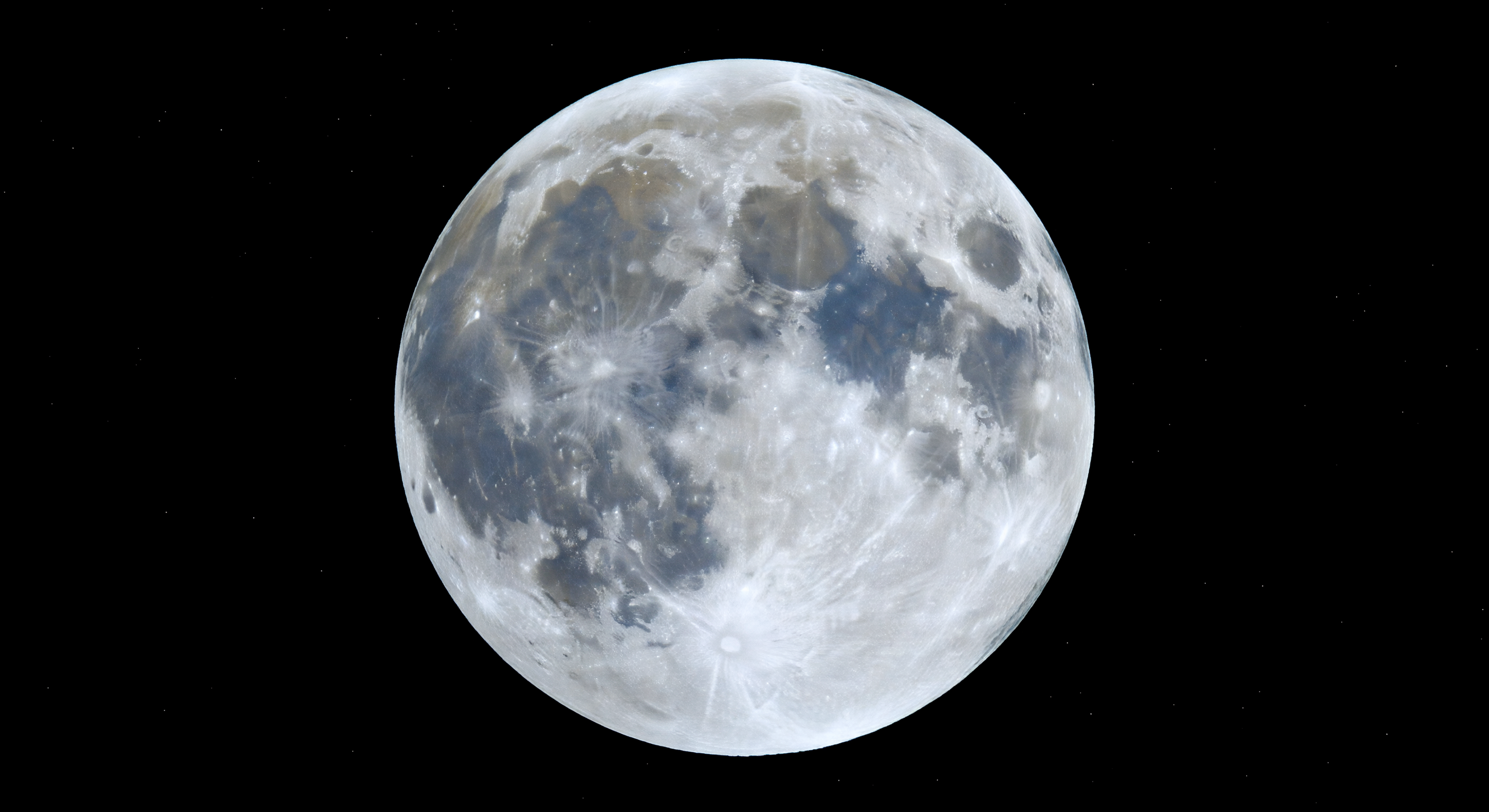
Scientific confidence: High

A luminous fault scarp rises like a frozen wall above the battered plains, its near-vertical face of exposed water ice split by dark joints, stepped terraces, and narrow crevices, while a broad apron of shattered blocks sprawls across the foreground in sharp-edged heaps preserved by feeble gravity. Around your feet, brittle cryogenic regolith and pale rubble merge into ancient crater ejecta and hummocky broken ground, then fade outward into vast highlands crowded with softened impact scars and isolated tectonic ridges—evidence of an old ice shell stretched and fractured by extensional forces long after the surface first formed. In the hard, low-angle sunlight, the cleanest ice flashes bluish-white and almost radiant, while slightly darker bands betray traces of non-ice contaminants mixed into the crust. Above it all hangs a perfectly black, airless sky, where every shadow is long and absolute, making the landscape feel silent, immense, and uncannily pristine.

From the knife-edged crest of an ancient impact rim, the ground underfoot is shattered water-ice bedrock—hard as stone in the deep cryogenic cold—breaking into angular slabs, jagged boulders, and steep talus that spills into a crater interior lost in almost complete blackness. With no meaningful atmosphere to scatter light, the horizon is razor sharp, the Sun burns as a small, fierce white disk, and shadows fall with absolute darkness, while only a faint reflected silver-blue glow picks out terraces, slump scars, and isolated bright ice exposures along the inner wall. Beyond the abyss, densely cratered plains and subdued icy highlands stretch away, their surfaces recording billions of years of impacts and tectonic fracturing on a world made mostly of water ice mixed with lesser rock. Hanging over it all, enormous against the airless sky, the ringed giant dominates the view, making the scene feel both silent and immense—an austere frozen landscape shaped by impact, low gravity, and relentless exposure to space.

At the edge of a young impact crater, the ground blazes with fresh water ice: a powdery, frost-bright ejecta blanket strewn with sharp angular blocks, shattered boulders, fractured slabs, and tiny ridges that gleam bluish-white in the hard sunlight. Nearby, the crater rim rises in steep, crisp terraces preserved by low gravity and the absence of air, while shallow secondary craters and frozen icy breccia mark the violence of the impact that excavated this clean subsurface material. Beyond the brilliant ray field, the older plains fade into muted gray and dirty off-white, their softened craters and darker regolith recording ages of micrometeorite gardening and radiation weathering in an airless vacuum. Under a perfectly black sky and a distant, pinpoint Sun, every shadow falls jet-black and every icy facet flashes cold light, making the landscape feel both silent and immense as it curves away across the battered horizon.
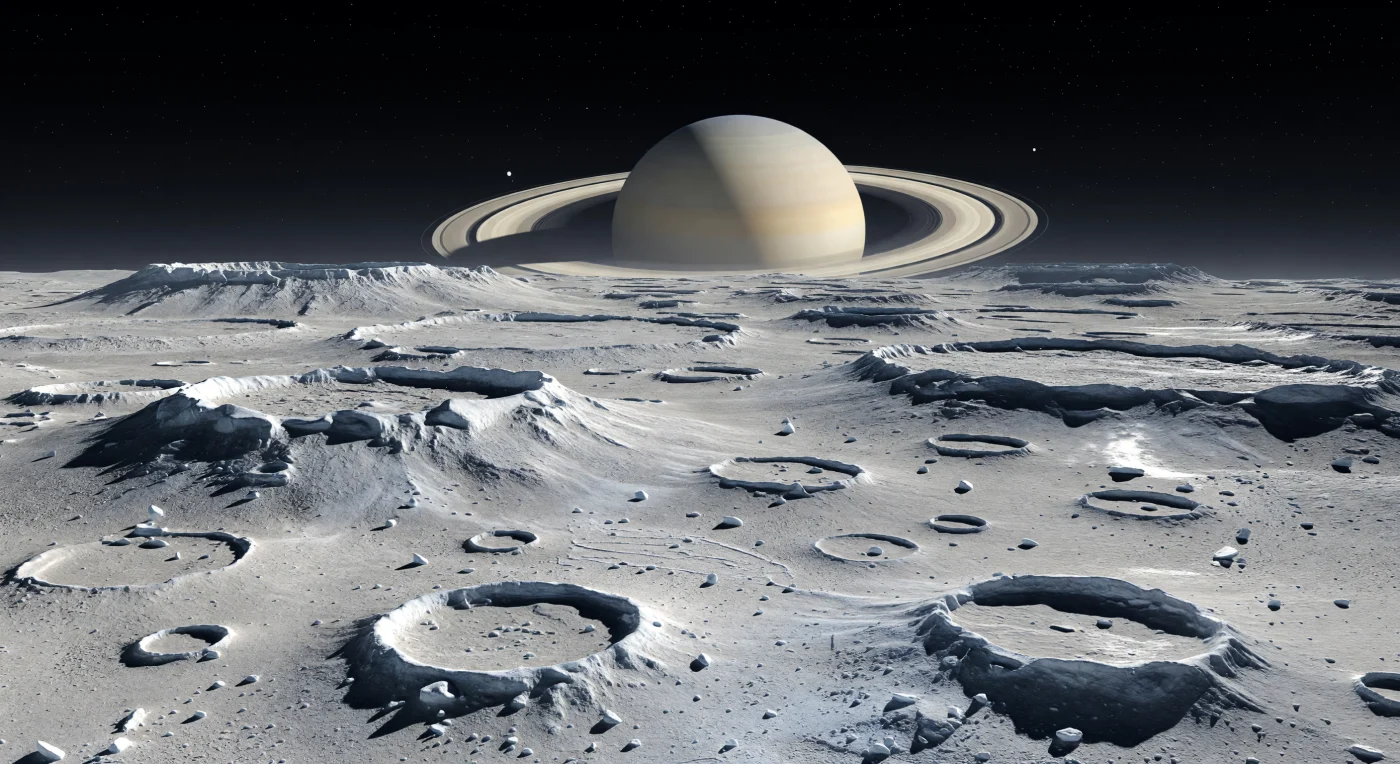
From these ancient uplands, the ground is a frozen maze of overlapping impact scars: sharp-rimmed bowls, fractured crater walls, scattered angular ice blocks, and broad worn basins fading into a horizon of subdued icy ridges. The surface is hard water-ice bedrock mantled by pale gray-white regolith, preserving billions of years of bombardment in a landscape barely softened by erosion because the world is essentially airless, with only a vanishingly thin exosphere and no liquid weathering at all; even subtle tectonic scarps still cut cleanly across some slopes. Under the tiny, intense Sun, shadows fall as deep black blades across frost-textured ice and dusty slopes, while shaded ground turns cold bluish gray and bright facets flash with sharp glints in the low gravity. Above the black sky of space, enormous banded Saturn hangs almost motionless over the horizon, its broad silver-white rings spanning the heavens and making the cratered highlands below feel at once desolate, pristine, and impossibly vast.

Under a perfectly black noon sky, a broad equatorial plain of water-ice regolith stretches outward in silvery white and pale gray waves, its frost-hard grains and scattered angular ice fragments flashing with sharp specular glare beneath a small but piercing Sun high overhead. Short, hard-edged shadows cling tightly beneath fractured cobbles, subdued crater rims, and shallow bowl-shaped depressions, revealing a landscape shaped overwhelmingly by ancient impacts, then slowly softened by eons of micrometeorite gardening in an almost airless environment. Patches of slightly darker material hint at meteoritic contamination mixed into the icy soil, while low hummocky ejecta swells and sparse secondary craterlets ripple across the middle distance toward faint cratered uplands on the low-gravity horizon. With no atmosphere to scatter light, no clouds, and no giant primary world hanging in this anti-planet-facing sky, the scene feels stark, frozen, and immense—an ancient ice desert preserved in vacuum.
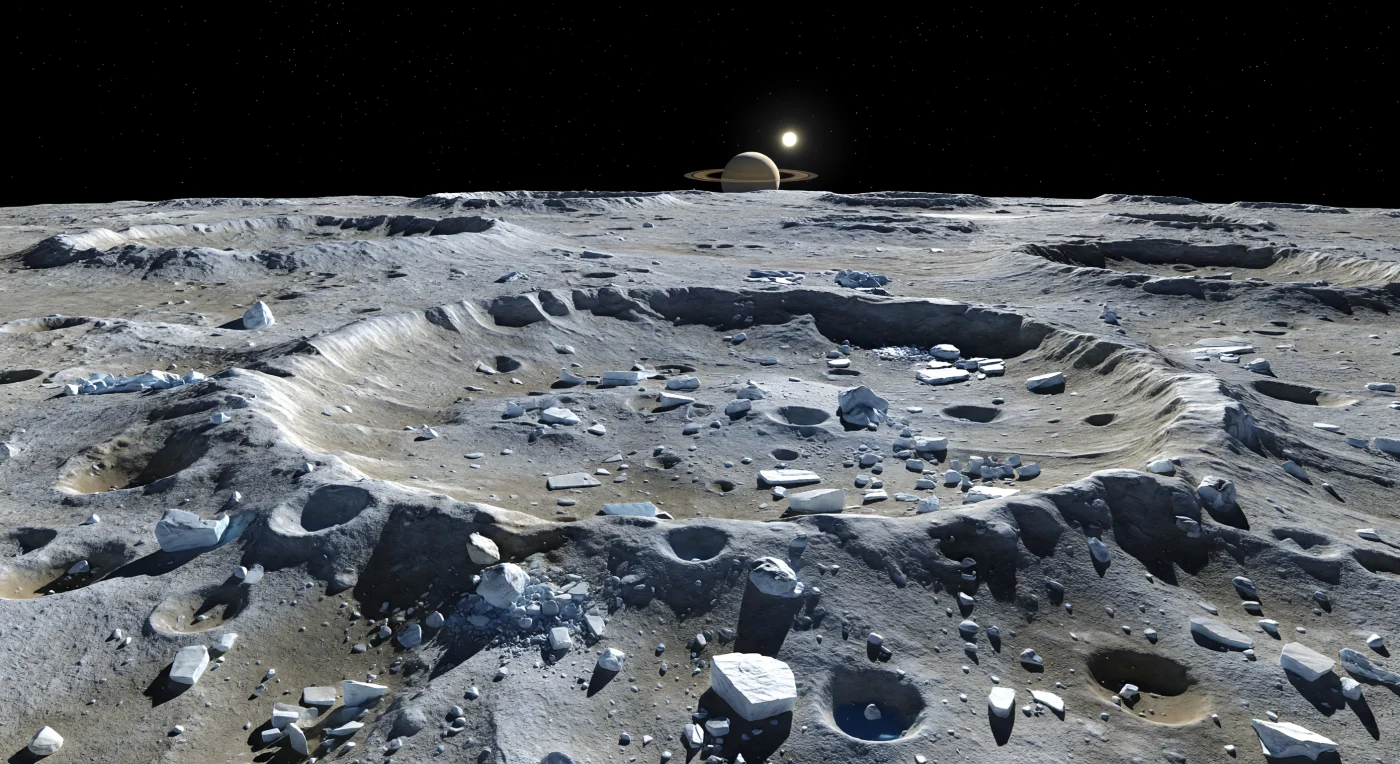
From this low vantage, the ground is a jumbled ejecta apron of compact water-ice regolith, where rounded hummocks, knobby ridges, and shattered angular blocks were blasted outward and dropped back around an ancient crater. Bright gray-white ice, faintly bluish in the hard sunlight, is dulled in places by tan-gray and charcoal meteoritic contamination, while fractured slabs and frost-bright rubble throw deep blue-black shadows into every hollow. In the moon’s weak gravity and airless vacuum, nothing softens the scene: no haze, no weather, only razor-sharp light under a pure black sky, with every distant crater rim and overlapping upland ridge standing out in extraordinary clarity. The result is a landscape that feels both frozen and violent—a preserved record of impacts in cryogenic crust, stretching outward in stark, immense silence.
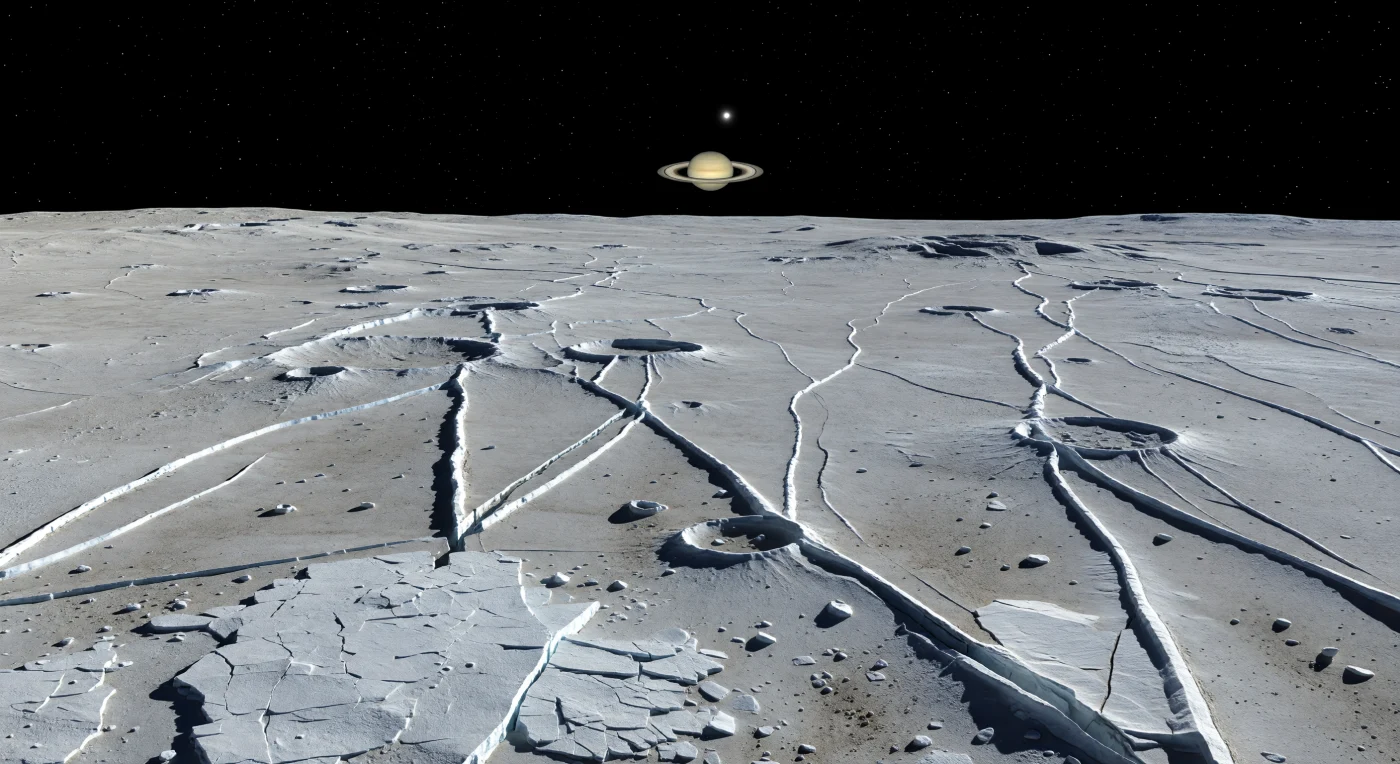
You stand on a vast gray-white plain of cryogenic water ice where the so-called wispy terrain resolves into immense tectonic scars: bright, branching scarps and rib-like fault-bounded ridges slicing across the ancient crust, with narrow dark troughs and graben marking places where the surface has been pulled apart. Around you, hard ice bedrock is shattered into angular slabs, dusted with darker micrometeoritic debris and radiation-processed material that has collected in cracks, while old impact craters are visibly cut, offset, and terraced by later extension. In the weak, low-angle sunlight, fresh icy faces flash brilliant white and cast razor-edged black shadows, making even modest scarps look severe on this low-gravity world where subtle rises and crater walls can dominate the horizon across tens of kilometers. Above the silent landscape, the sky is perfectly black and airless, with no haze or weather to soften the scene—only the sense of standing in a frozen tectonic ruin, preserved in extraordinary detail for eons.

You stand on the floor of an immense, ancient impact basin where the landscape has been worn almost smooth by deep time: pale ice-rich regolith rolls away in gentle swells, dotted with softened little craters, low hummocks, scattered icy blocks, and occasional ledges of fractured water-ice bedrock pushing through the chalky dust. Here, water ice is the rock itself—brittle, impact-shattered, and dust-mantled—preserving a frozen record of bombardment in a world so cold and airless that nothing blurs the view: no wind, no clouds, no weather, only hard-edged shadows under a small distant Sun. The basin’s vast scale reveals itself slowly, in the faint rise of a worn rim on the horizon and overlapping crater scars softened by age, all stretched beneath a pure black sky where even midday feels dim and severe. In the weak light, the ground glints faintly with bluish-white highlights, and the enormous stillness of this low-gravity plain makes every ridge, hollow, and shadow seem suspended in an endless frozen silence.
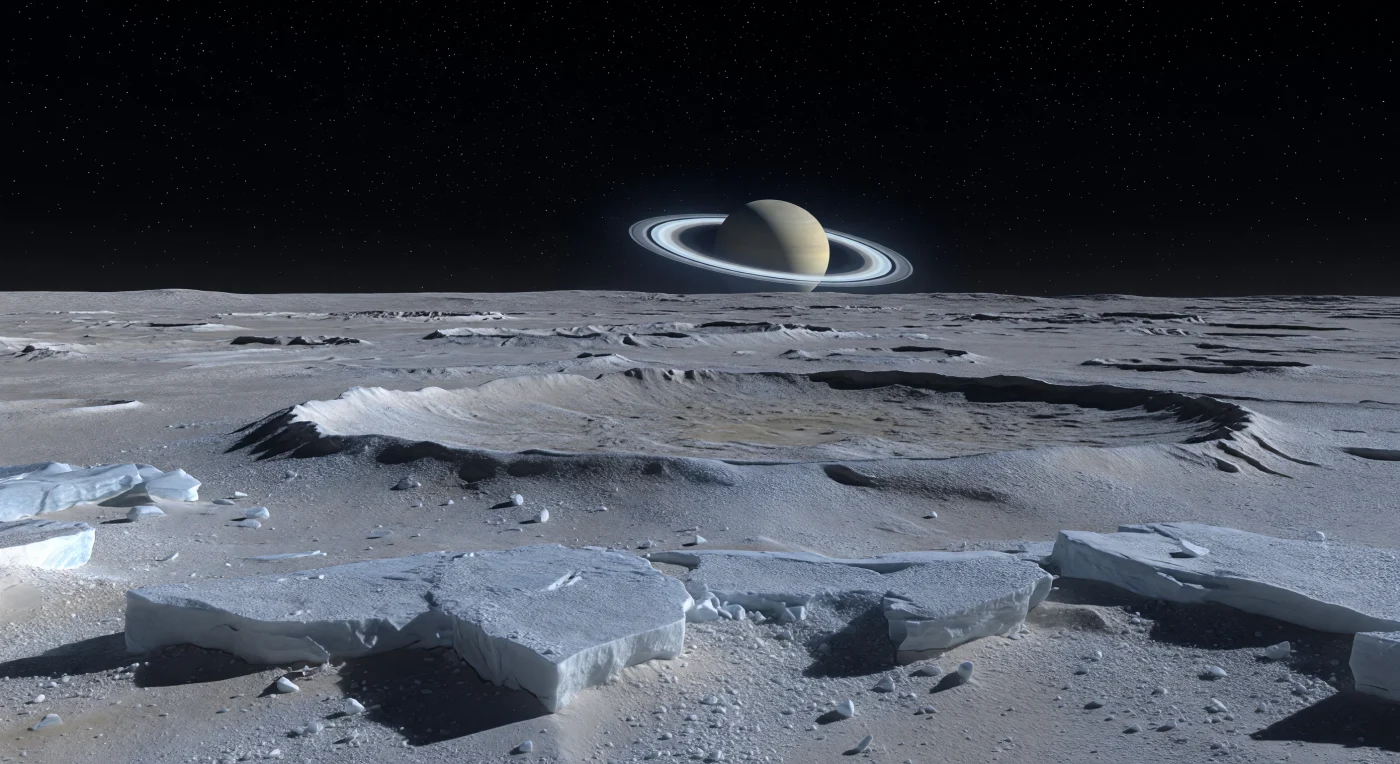
Under a star-crowded black sky, a frozen polar plain of ancient water-ice bedrock stretches away in ghostly silence, its pale regolith, frost-bright rubble, and low worn crater rims barely revealed by the eerie silver-blue glow of Saturnshine and light reflected from the rings. The surface is rigid and airless, shaped not by wind or liquid but by billions of years of impacts, leaving overlapping craters, subdued ejecta hummocks, and angular ice blocks scattered across a cryogenic landscape stained here and there by faint tan-gray non-ice impurities. Saturn looms enormous above the horizon, its softly banded globe and luminous rings casting the only illumination of this winter darkness, so that exposed ice grains glint weakly while deeper hollows vanish into near-perfect black. In the moon’s weak gravity, the horizon seems improbably distant and the terrain unnervingly still, as if you were standing in a vast frozen archive of the outer Solar System.
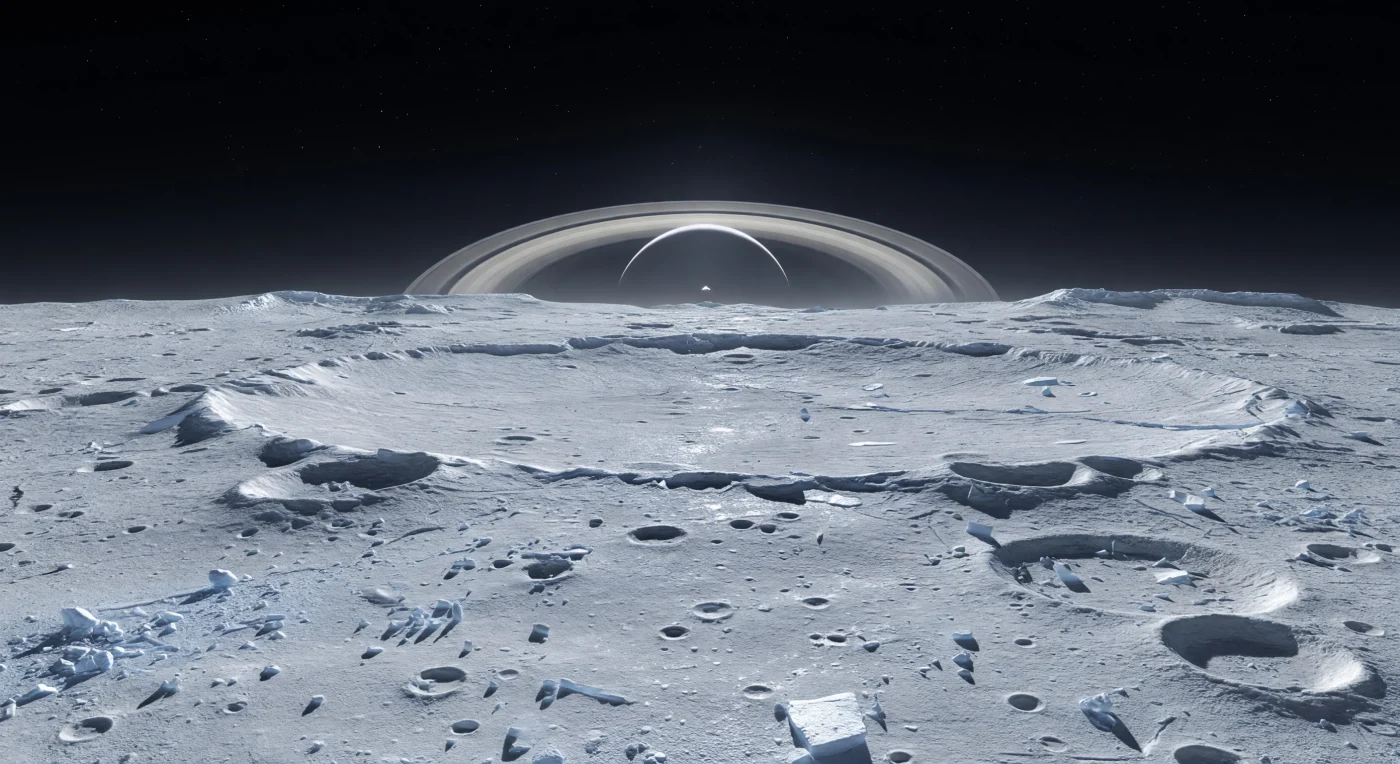
In the deep twilight of eclipse, the ancient ice plains lie in muted silver-blue relief, their frost-coated regolith and shattered water-ice bedrock broken into angular rubble, crisp crater rims, and scattered blocks preserved by an airless cold so intense that almost nothing softens with time. Long, subdued shadows spill across overlapping impact bowls, secondary crater chains, low ejecta hummocks, and faint tectonic scarps, while occasional clean ice patches glint against darker streaks of contaminant-rich material mixed through the otherwise brilliant surface. Over the low horizon hangs an immense, dark-edged globe blotting out the distant Sun, and its broad rings become the main light source, bathing the frozen landscape in a ghostly reflected glow that reveals the moon’s water-ice-rich crust and its vast record of bombardment. With no atmosphere to blur the view, the black sky, faint stars, and enormous suspended planet make the scene feel impossibly still and vast, as if you were standing on the exposed memory of the outer Solar System.